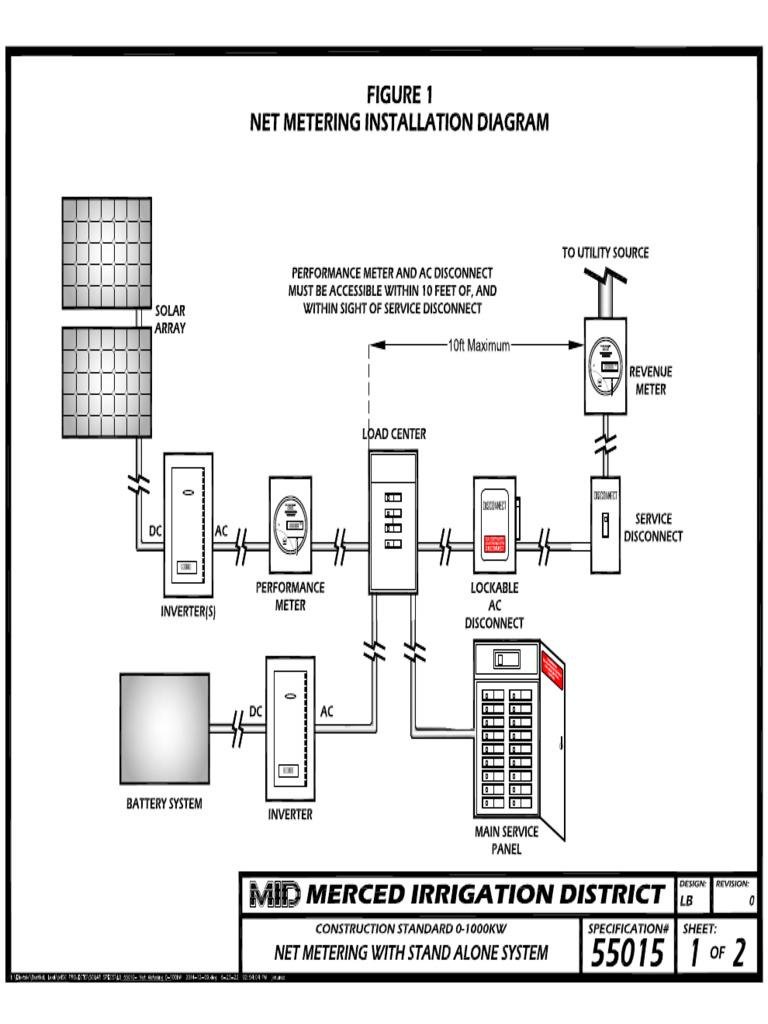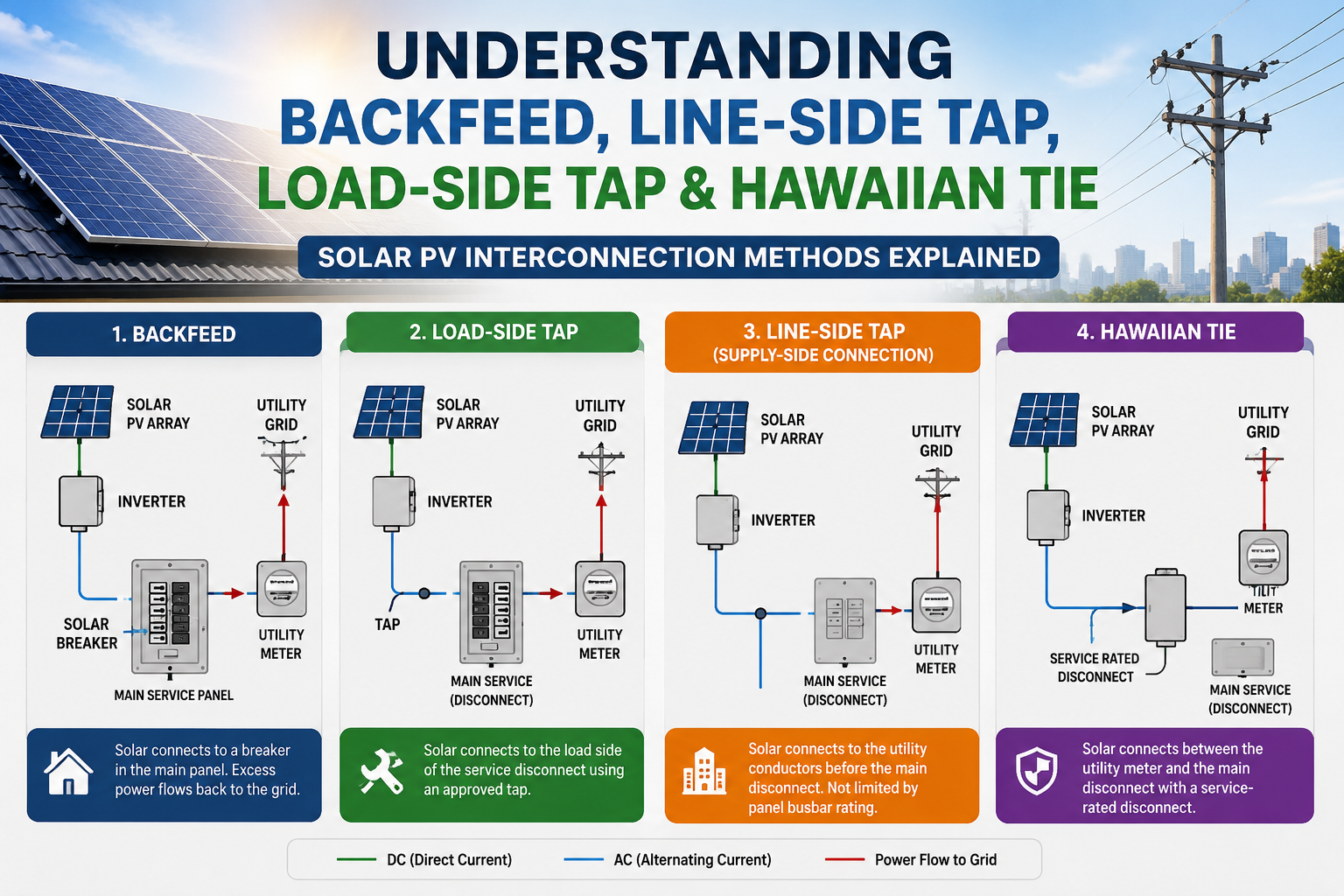
Introduction:
Solar PV interconnection methods determine how a solar photovoltaic (PV) system is connected to an existing electrical service and the utility grid. Choosing the correct interconnection method is important for electrical safety, protection, power flow, and compliance with applicable electrical codes and utility requirements.
Among the most commonly used interconnection methods are Backfeed Connection, Line-Side Tap, Load-Side Tap, and Hawaiian Tie (Supply-Side Connection). Each method has unique applications, advantages, limitations, and installation requirements.
This guide explains each interconnection method in detail so that solar designers, installers, and engineers can select the most appropriate solution for their projects.
What is Solar Interconnection?
Solar interconnection is the process of connecting a photovoltaic (PV) system to an existing electrical distribution system or utility grid. The objective is to transfer the electricity generated by the solar panels safely while protecting both the customer and the utility network.
The selected interconnection method depends on several factors, including:
Existing electrical panel capacity
Utility regulations
Solar system size
National Electrical Code (NEC) requirements
Available breaker space
Service entrance configuration
1. Backfeed Interconnection
What is Backfeed?
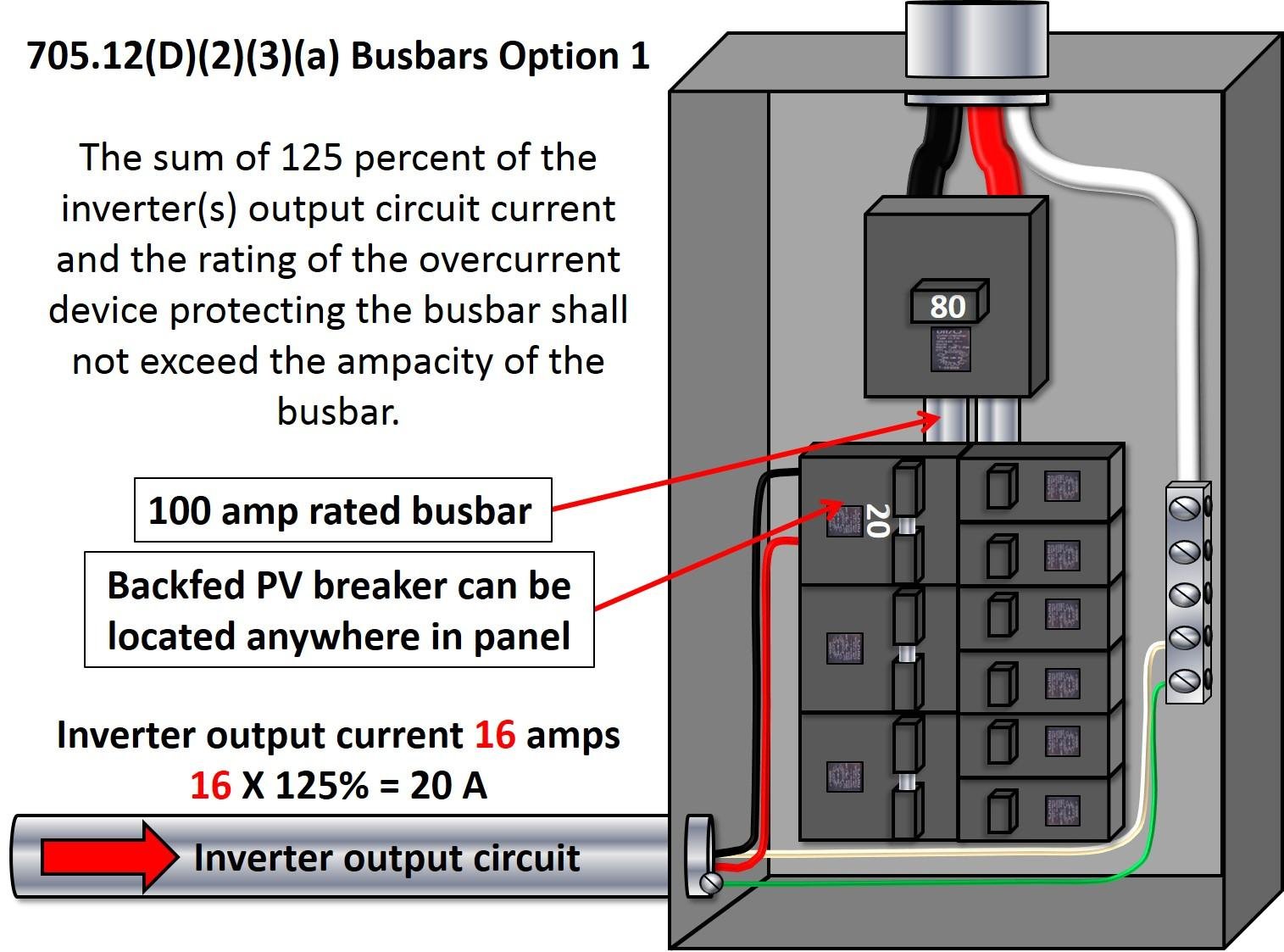
Backfeed interconnection is the most common method used in residential and small commercial solar systems. In this configuration, the output of the solar inverter is connected to a dedicated circuit breaker located in the customer's main distribution panel.
Electricity generated by the solar system first supplies the building's electrical loads. Any excess energy that is not immediately consumed flows backward through the main breaker and into the utility grid. This reverse flow of electricity is known as backfeeding.
How It Works
1.Solar panels generate DC power.
2.The inverter converts DC power into AC power.
3.AC power enters the distribution panel through a dedicated solar breaker.
4.Building loads consume available solar energy.
5.Surplus energy flows back to the utility through the service connection
Advantages:
Simple and economical installation.
No major modifications to the service entrance.
Suitable for most residential systems.
Widely accepted by utilities.Easy maintenance and inspection.
2. Load-Side Tap
What is a Load-Side Tap?
A Load-Side Tap connects the solar PV system to the load side of the service disconnect but not necessarily through a dedicated breaker in the main panel. Instead, the solar conductors are tapped into feeder conductors using approved connectors or junction boxes.
How It Works
The solar inverter output is connected to feeder conductors downstream of the main disconnect. Solar power then supplies building loads first, with excess electricity exported to the utility grid.
Advantages
Useful when no breaker space is available.Reduces the need for service panel replacement.Lower installation cost compared to a complete service upgrade.Suitable for larger PV systems where permitted.
Limitations
Requires proper tap connectors.Must comply with NEC tapping rules.Installation is more complex than a simple breaker connection.
Typical Applications
Commercial buildings
Industrial facilities
Older electrical panels with limited space
3. Line-Side Tap (Supply-Side Connection)
What is a Line-Side Tap?
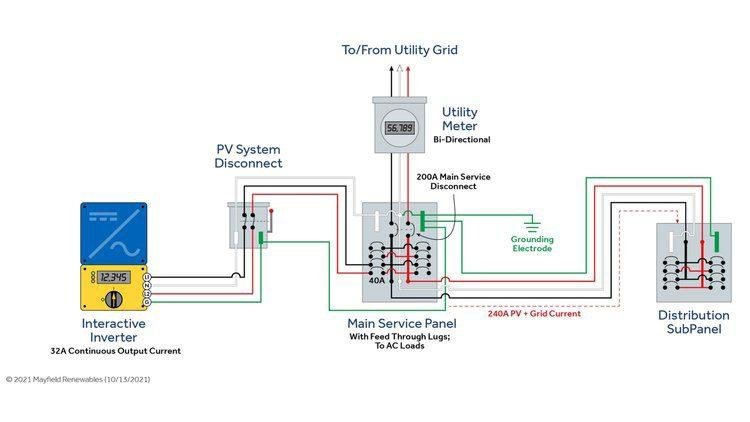
A Line-Side Tap, also called a Supply-Side Connection, connects the solar system directly to the utility service conductors before the main service disconnect.
Because the connection is made ahead of the main breaker, the solar output is not limited by the panel's busbar rating. This allows significantly larger PV systems to be installed without replacing the existing distribution panel.
How It Works
The inverter output is connected to the incoming utility service conductors using approved service-rated equipment. Solar energy flows directly into the service entrance while still supplying building loads and exporting excess energy to the grid.
Advantages
Ideal for large solar systems
.Not limited by busbar calculations.
Eliminates many panel upgrade requirements.
Supports higher inverter capacities.
Limitations
Installation is more complex.
Utility approval is often required.
Requires service-rated equipment and strict safety procedures.Higher installation cost.
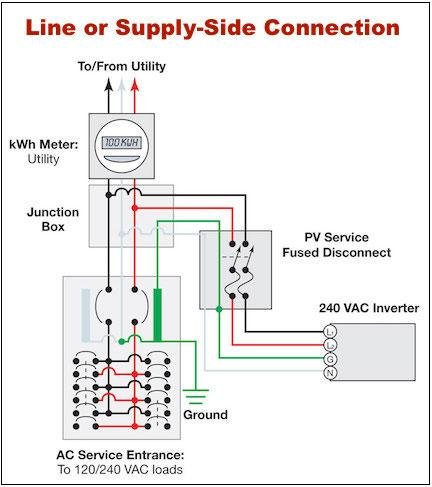
4. Hawaiian Tie Interconnection
What is a Hawaiian Tie?
A Hawaiian Tie is a specialized form of supply-side interconnection where the solar system is connected between the utility meter and the main service disconnect. The term originated in Hawaii, where utilities encouraged this configuration because of the extremely high penetration of rooftop solar systems.In this arrangement, the solar generation is connected directly at the service entrance using a dedicated service-rated disconnect.
In this arrangement, the solar generation is connected directly at the service entrance using a dedicated service-rated disconnect.
Why is it Called Hawaiian Tie?
Hawaii has one of the highest percentages of rooftop solar installations in the world. Utilities required a connection method that minimized overload concerns on existing distribution panels while maintaining safety and reliability. This approach became widely known as the Hawaiian Tie.
Advantages
Supports large PV capacities.
Reduces busbar loading concerns.
Avoids replacing existing panels.
Preferred where high solar penetration exists.
Limitations:
Utility-specific approval is usually required.
Installation requires experienced electricians.
Additional disconnects and service-rated equipment increase project cost.
Conclusion
Understanding the differences between Backfeed, Load-Side Tap, Line-Side Tap, and Hawaiian Tie is essential for designing safe, reliable, and code-compliant solar PV systems. Each interconnection method offers unique benefits depending on system size, electrical infrastructure, and utility requirements.
Residential projects typically use backfeed connections, while larger commercial and industrial installations often require load-side or line-side taps to overcome panel limitations. Hawaiian Tie configurations provide an effective solution in locations with high solar penetration or specific utility requirements.
Selecting the proper interconnection method at the design stage helps reduce installation costs, avoid code violations, simplify utility approval, and ensure long-term system reliability.