Introduction
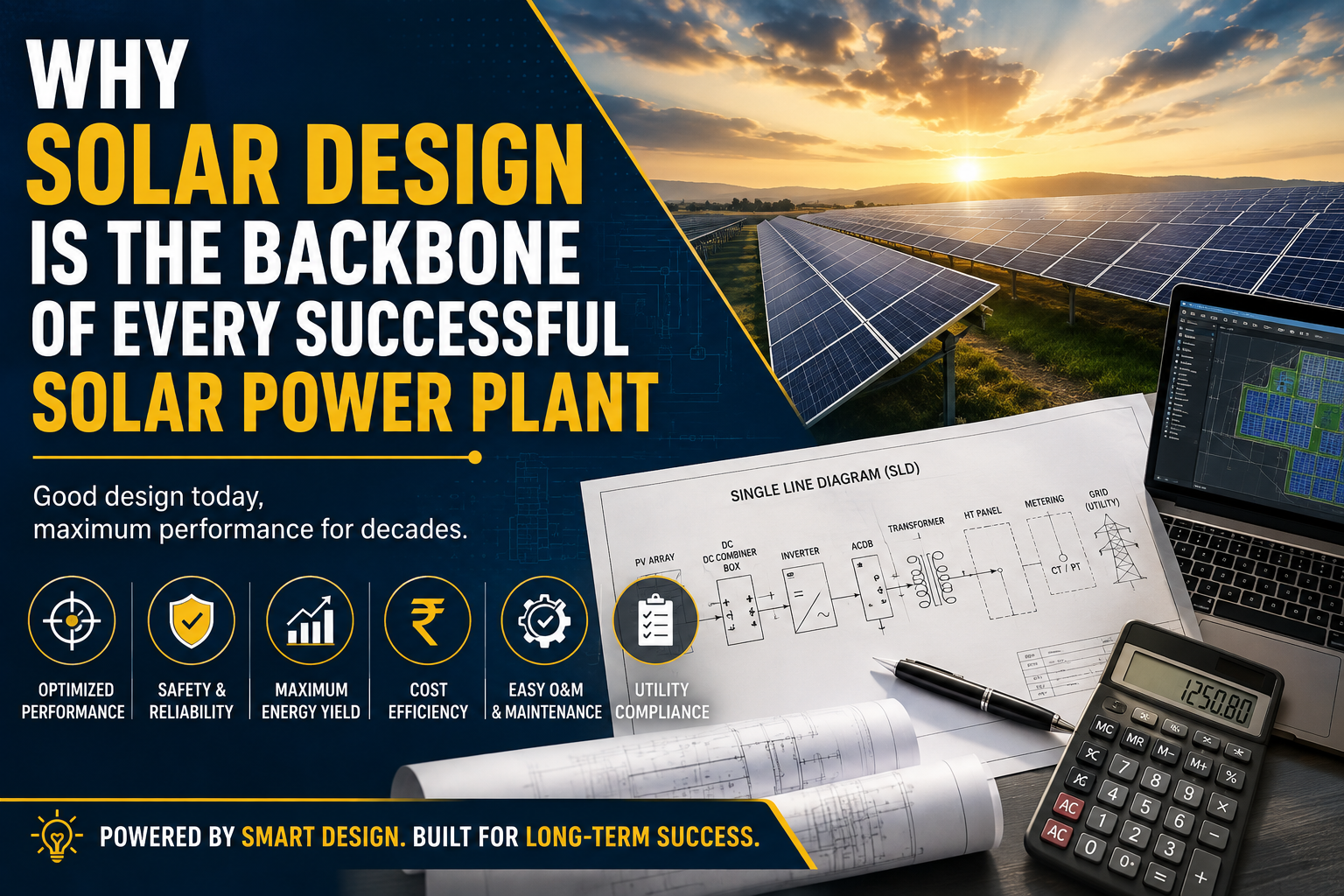
When people think about a solar power plant, they often focus on solar modules, inverters, or installation activities. However, one of the most critical phases of any solar project happens long before construction begins: Solar Design & Engineering.
A well-engineered design serves as the blueprint for the entire project. It determines how efficiently the plant will generate energy, how safely it will operate, and how smoothly the construction team can execute the project.
Without proper design, even the best equipment can fail to deliver expected performance.
Why Solar Design Matters
1. Maximizing Energy Generation
The primary goal of every solar project is to generate the highest possible energy output.
Through detailed design and simulation, engineers optimize:
- Module orientation and tilt angle
- Row spacing
- String configuration
- Inverter loading ratio
- Shading analysis
These factors directly impact the annual energy yield and project profitability.
2. Reducing Project Costs
A smart design doesn’t just improve performance—it also reduces costs.
Optimized engineering helps minimize:
- DC cable lengths
- AC cable lengths
- Trenching requirements
- Structural steel consumption
- Electrical losses
The result is a more economical project with a faster return on investment.
3. Ensuring Safety and Compliance
Solar plants operate at high voltages and require strict adherence to electrical safety standards.
Proper engineering ensures:
- Correct cable sizing
- Effective earthing systems
- Lightning protection
- Fault current management
- Grid compliance
Safety cannot be achieved on-site alone—it begins during the design phase.
4. Enabling Smooth Project Execution
Construction teams rely heavily on engineering drawings.
Accurate documentation helps eliminate confusion and reduces costly site modifications.
Key drawings include:
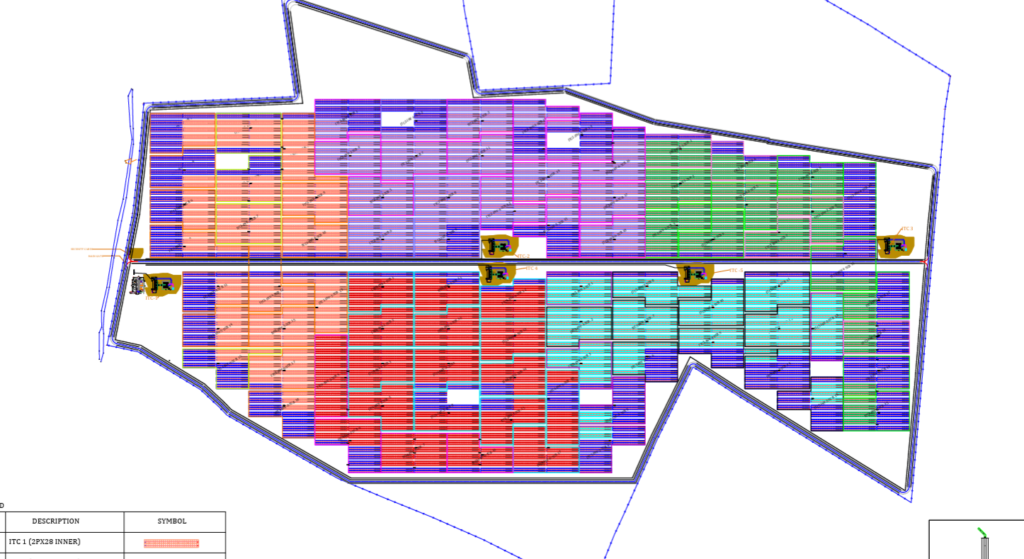
- Plant Layout
- Single Line Diagram (SLD)
- String Layout
- Inverter Grouping
- DC Cable Routing Layout
- AC Cable Routing Layout
- Earthing Layout
- Lightning Protection Layout
These documents act as the roadmap for successful execution.
5. Improving Long-Term Reliability
The operational life of a solar plant typically exceeds 25 years.
Design decisions made today will influence:
- System reliability
- Maintenance requirements
- Equipment lifespan
- Plant availability
A properly engineered plant experiences fewer failures and lower operational costs.
The Role of a Solar Design Engineer
A Solar Design Engineer bridges the gap between project requirements and successful execution.
Their responsibilities include:
✔ Site Assessment Review
✔ System Sizing
✔ Energy Yield Analysis
✔ Electrical Design
✔ Cable Sizing Calculations
✔ Earthing Calculations
✔ BOQ Preparation
✔ Engineering Documentation
Every successful solar project starts with these critical engineering activities.
The Cost of Poor Design
Insufficient engineering can lead to:
❌ Energy generation losses
❌ Excessive voltage drop
❌ Higher installation costs
❌ Cable overheating issues
❌ Construction delays
❌ Safety risks
❌ Frequent operational failures
The cost of correcting design mistakes during construction is often significantly higher than investing in quality engineering from the beginning.
Conclusion
Solar power plants are not built successfully by equipment alone. Their performance, safety, reliability, and profitability are determined by the quality of engineering behind them.
A strong design lays the foundation for efficient construction, optimal energy generation, and long-term operational success.
In the solar industry, design is not just a phase of the project—it is the foundation of the entire project.