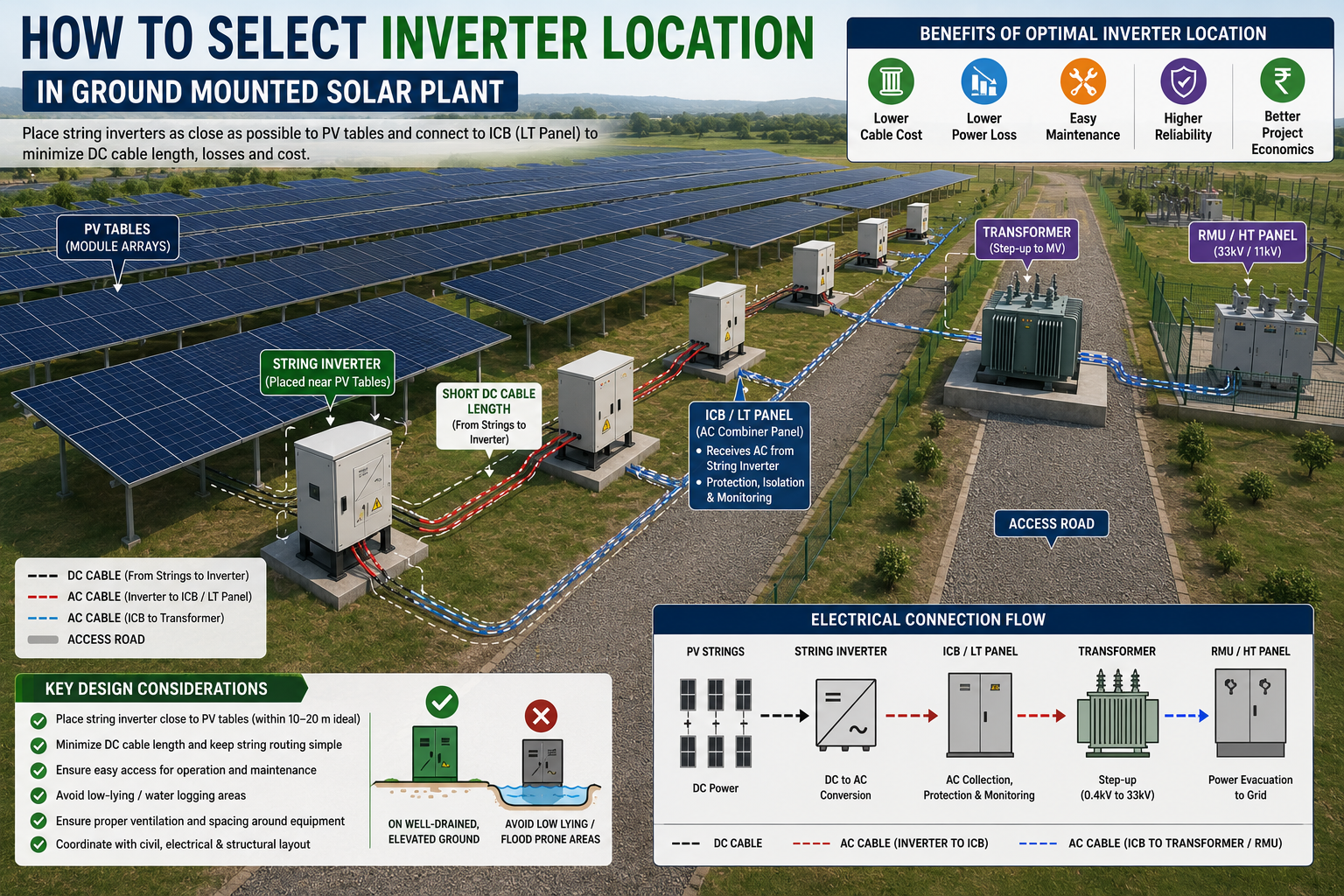
Inverter Location in Ground Mounted Solar Plant
Inverter Location in a Ground Mounted Solar Plant is one of the most critical engineering decisions during solar power plant design. Proper inverter placement minimizes DC cable length, reduces voltage drop, lowers installation costs, improves maintenance accessibility, and increases the overall efficiency and reliability of the solar power plant. A well-planned inverter location also simplifies cable routing, improves safety, and supports future system expansion.
Many new designers focus only on fitting the inverters into the available space. However, experienced solar engineers consider electrical, civil, structural, environmental, and operational factors before finalizing the inverter location.
In this guide, we'll explain every important consideration for selecting the best inverter location in a ground-mounted solar power plant.
Why Is Inverter Location Important?
The inverter converts DC electricity from solar modules into AC electricity. Since all strings are connected to the inverter, its location directly affects:
DC cable length
AC cable length
Voltage drop
Energy losses
Installation cost
Maintenance accessibility
Future plant expansion
Plant safety
A poor inverter location can increase cable costs by thousands of dollars on large utility-scale projects and reduce overall system efficiency.
1. Place the Inverter Near the Centre of Its Assigned PV Arrays
The inverter should ideally be located near the centre of the PV arrays it serves.
Benefits:
Shorter DC cable lengths
Lower DC voltage drop
Reduced cable costs
Balanced string routing
Easier cable management
Designers often divide the plant into inverter blocks, with each inverter serving a specific group of module rows.
2. Minimise DC Cable Length
Since DC cable is required from every string to the inverter, long cable runs increase:
Cable cost
Voltage drop
Power loss
Installation time
A compact inverter layout significantly reduces these issues.Best PracticeTry to keep string cable lengths as uniform as possible to simplify installation and maintenance.
3. Optimise AC Cable Length
While reducing DC cable length is important, the AC side must also be considered.
If the inverter is too far from the transformer or RMU, the plant will require: Larger AC cables Higher installation costs Greater voltage drop More trench excavationThe goal is to balance both DC and AC cable lengths for the lowest total project cost.
4. Consider Topography and Terrain
Never place an inverter based solely on electrical considerations.
Check the topographical survey for:
Steep slopes
Low-lying areas
Rocky ground
Areas requiring excessive earthwork
Placing the inverter on relatively level ground reduces civil construction costs.
5. Avoid Flood-Prone Areas
One of the most common mistakes is installing inverters in areas where water accumulates during heavy rainfall.
Avoid:
Natural drainage paths
Depressions
Water channels
Seasonal ponds
The inverter foundation should remain above the highest expected water level.
6. Ensure Easy Maintenance Access
Maintenance teams need regular access to the inverter.
Provide:
Internal access roads Adequate working clearance Safe equipment lifting space Room for doors to open fullyGood accessibility reduces maintenance time and improves worker safety.
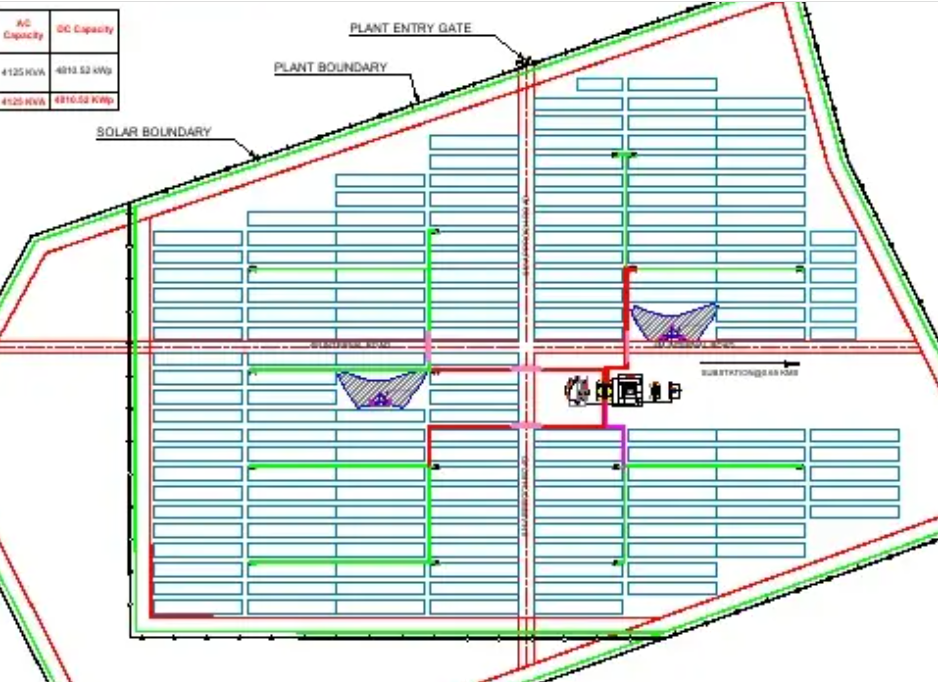
7. Keep Cable Routing Simple
A complicated cable layout increases installation errors and future maintenance challenges.
Design cable trenches with:
Straight routes
Minimal crossings
Organised cable segregation
Easy identificationSimple routing reduces construction time and improves reliability.
AC cable routing diagram
8. Consider Future Expansion
If plant expansion is planned, reserve adequate space around inverter locations for:
Additional inverters
Cable trenches
Transformers
Auxiliary equipment
Planning ahead avoids expensive redesign work later.
9. Maintain Safe Equipment Clearance
Adequate spacing is essential for ventilation, maintenance, and safety.
Maintain clearance around:
Inverters
Transformers
RMUs
HT panels
Cable trenches
Always follow the equipment manufacturer's recommendations and local electrical standards.
10. Coordinate with Other Engineering Disciplines
The inverter location should be finalised only after coordination with:
Civil engineering
Structural engineering
Electrical engineering
Drainage design
Earthing design
SCADA and communication teams
This multidisciplinary approach avoids clashes during construction.
Conclusion:
Selecting the right inverter location in a ground-mounted solar power plant is more than simply finding an empty space. It requires balancing electrical efficiency, civil feasibility, maintenance access, safety, and future scalability. A carefully planned inverter layout reduces cable costs, minimises energy losses, simplifies installation, and improves long-term plant reliability.
By considering cable lengths, terrain, drainage, accessibility, and coordination with other engineering disciplines, designers can develop a more efficient and cost-effective solar plant.